
Malaria

Malaria is a deadly disease transmitted to people primarily through the bites of mosquitoes in tropical areas.1 Malaria is highly prevalent with nearly half the world’s population at risk, including indigenous people, migrants and travelers.2 Most malaria cases (95%) arise in Africa, and children are most at risk. The disease is one of the continent’s most persistent public health threats.1,3 Through a global collaboration with Gavi, the Vaccine Alliance, and UNICEF, many African countries now have access to malaria vaccines through their routine childhood immunization programs and others are expected to expand vaccine coverage.4,5

282 million malaria cases and 610,000 deaths globally in 20241

30 million more malaria cases have been reported globally since 2013, reflecting a surge in the last decade6

75% of the global deaths from the disease are in children under five years old3

We’ve partnered with the Serum Institute of India and Oxford University to provide our Matrix-M® adjuvant for the R21/Matrix-M malaria vaccine. R21/Matrix-M is the first low-cost, high-efficacy malaria vaccine produced at scale, and is authorized for use in children in malaria-endemic regions.7 It has been launched in about 24 countries around the world with more than 25 million doses in market. It is a critical global public health tool and a strategic opportunity in a market where demand significantly exceeds current supply.
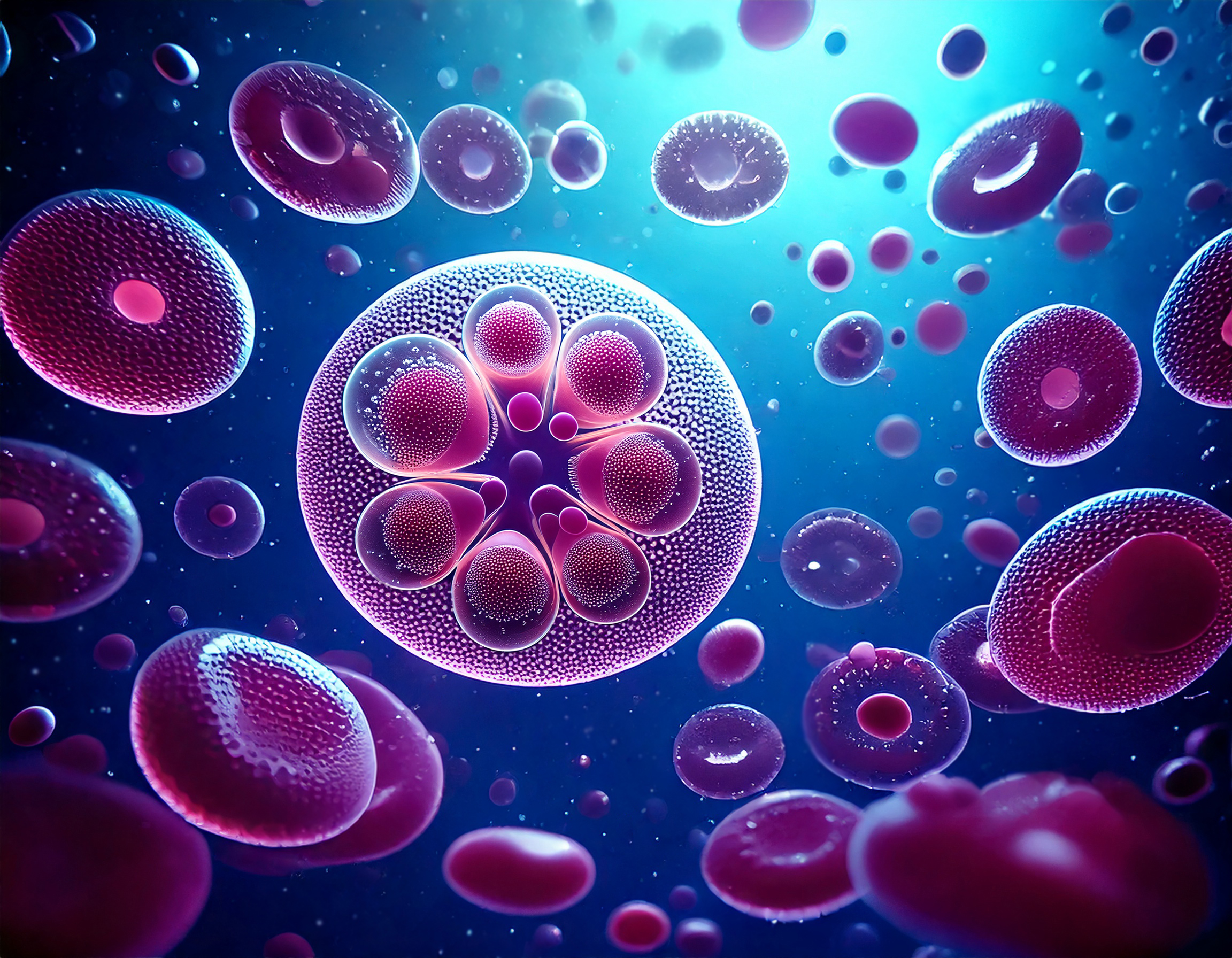
The R21 antigen in combination with our Matrix-M adjuvant creates a vaccine with a broad and durable immune response.8 R21/Matrix-M is a low-dose, highly effective and affordable vaccine that can be manufactured at speed and scale.
Matrix-M®
Our proprietary adjuvant enhances the body’s immune response to a vaccine.

Partnership
We forge dynamic collaborations to amplify the impact of our technology and pipeline.
- World Health Organization. Malaria [Internet]. Available from: https://www.who.int/
news-room/ . Accessed 2025 Sept 16.fact-sheets/ detail/ malaria - Escalante AA, Pacheco MA. Malaria molecular epidemiology: an evolutionary genetics perspective. Microbiol Spectr. 2019;7:10.1128/
microbiolspec. AME-0010-2019. - Gavi: The Vaccine Alliance. Malaria Vaccine Support. Available from: https://www.gavi.org/
types-support/ . Accessed 2025 Sept 16.vaccine-support/ malaria - World Health Organization. Life-saving malaria vaccines reach children in 17 endemic countries in 2024. Available from: https://www.who.int/
news-room/ . Accessed 2025 Sept 16.feature-stories/ detail/ life-saving-malaria-vaccines-reach-children-in-17-endemic-countries-in-2024 - Nature Africa. Africa launches historic malaria vaccine rollout amid funding uncertainty. Available from: https://www.nature.com/
articles/ . Accessed 2025 Sept 16.d44148-025-00245-8 - World Health Organization. World malaria report 2024: addressing inequity in the global malaria response. Available from: https://www.who.int/
publications/ . Accessed 2025 Sept 16.i/ item/ 9789240104440 - Datoo M, et al. Safety and efficacy of malaria vaccine candidate R21/Matrix-M in African children: a multicentre, double-blind, randomised, phase 3 trial. The Lancet. Volume 403, Issue 10426p533-544. doi: 10.1016/S0140-6736(23)02511-4.
- Stertman L, Palm AE, Zarnegar B, et al. The Matrix-M™ adjuvant: A critical component of vaccines for the 21st century. Hum Vaccin Immunother. 2023;
19(1): 2189885. doi:10.1080/ 21645515. 2023. 2189885.